
Understanding the Differences
Lets explore Protestant Eucharist vs. Catholic Eucharist. The Eucharist, also known as the Lord’s Supper or Holy Communion, is one of the central sacraments in Christianity. Its celebration unites Christians across denominations.
Yet Protestant and Catholic traditions differ significantly. These differences stem from theological, liturgical, and historical perspectives. Comparing them serves us well. So, let’s start with this fascinating exploration of faith and practice.
The Eucharist is one of the central sacraments in Christianity. While it unites Christians across denominations in commemorating Christ’s sacrifice, the Protestant and Catholic traditions differ significantly. This is because of their understanding and practice of the Eucharist.
The Catholic Eucharist
In the Catholic Church, the Eucharist is not merely a symbolic act but a profound mystery rooted in deep theological tradition.
Catholics believe in the doctrine of Transubstantiation, where the bread and wine while retaining their physical appearances, are transformed into the actual Body and Blood of Christ.
This Transformation happens during the consecration in the Mass. This belief is grounded in Christ’s words at the Last Supper: “This is my body… This is my blood” (Matthew 26:26-28). It is a profound mystery rooted in deep theological tradition.
Catholics believe in the doctrine of Transubstantiation. This is where the bread and wine, while retaining their physical appearances, are transformed into the actual Body and Blood, soul and divinity of the Lord Jesus Christ.
Key Features of the Catholic Eucharist:
Real Presence: The Real Presence of Christ is central to Catholic Eucharistic theology. This means that Jesus is wholly present—body, blood, soul, and divinity—in the consecrated elements.
Sacrificial Nature: The Catholic Mass represents Christ’s one-time sacrifice on Calvary. While the sacrifice is not repeated, it is made present in a mystical way during each celebration of the Eucharist, in which the believers participate.
Priestly Role: Only an ordained priest, acting in the person of Christ (in persona Christi), can consecrate the bread and wine. This role underscores the importance of apostolic succession and highlights the sacramental priesthood in Catholic theology.
Communion as Grace: Receiving the Eucharist is believed to impart sanctifying grace. It strengthens the recipient’s union with Christ and helps them grow in holiness.
Closed Communion: The Catholic Church practices closed communion. This means that only baptised Catholics in a state of grace may receive. Closed communion reflects the Church’s emphasis on doctrinal unity. It also highlights the seriousness and sacredness of the sacrament.
Liturgical Context:
The Eucharist is the centrepiece of the Catholic Mass. It is celebrated with a structured liturgy that includes prayers, hymns, Scripture readings, and the consecration of the elements.
Reverence for the Eucharist extends beyond Mass. It is extended in Worship practices like Eucharistic adoration, where the consecrated host is displayed for prayer and worship.
The Protestant Eucharist
The Protestant understanding of the Eucharist varies widely across denominations, with the exception of high Lutherans and Anglo Catholics. This reflects the diversity of confusion about proper practices within Protestantism.
While many Protestant traditions observe the Lord’s Supper as a significant practice, they generally reject the Catholic doctrine of Transubstantiation. Protestants generally interpret the Eucharist in ways that range from symbolic to spiritual.
Key Features of Protestant Eucharistic Theology:
Symbolism vs. Real Presence: Many Protestant denominations, with the exception of high Lutherans and Anglo Catholics, believe in a form of the Real Presence. However, their interpretations differ from each denomination and from the Catholic understanding.
Memorials: Following John Calvin, Reformed traditions often emphasise the Eucharist as a “memorial” of Christ’s sacrifice. Calvin also taught that Christ is only ‘spiritually’ present during the Lord’s Supper, though not physically present in the elements.
Accessible Leadership: In most Protestant traditions, ordained clergy or church leaders oversee the Eucharist. However, the emphasis is less on sacramental priesthood and more on communal leadership. Some denominations allow lay leaders to preside over the Lord’s Supper.
Open Communion: Many Protestant churches practice open communion. This is where all believers or unbelievers, regardless of denomination, participate. This reflects an inclusive approach aimed at fostering unity among all people.
Frequency and Setting: The frequency of Eucharistic celebrations varies widely among Protestants. Some traditions, like Lutherans and Anglicans, celebrate weekly, while others, such as Baptists, URC, and others, may observe it monthly or quarterly. The setting is often more straightforward compared to the Catholic Mass. Protestant worship focuses primarily on preaching Scripture rather than the Eucharistic.
Liturgical Context:
Protestant celebrations of the Eucharist tend to be less formal. In my experience, the liturgy is subject to the minister presiding. This is why the communion service can look very different from one minister to another.
In Protestantism, communion liturgy is flexible and less important than that of its Catholic counterparts. The idea is not to focus on ‘how’ the elements of bread and wine are presented; rather, it’s the’ remembering’ is the focus.
While modern denominations like Anglicans, Lutherans and some Methodists retain elements of Catholic liturgy, non-denominational evangelical churches adopt a more straightforward approach. They mainly focus on community and worship.
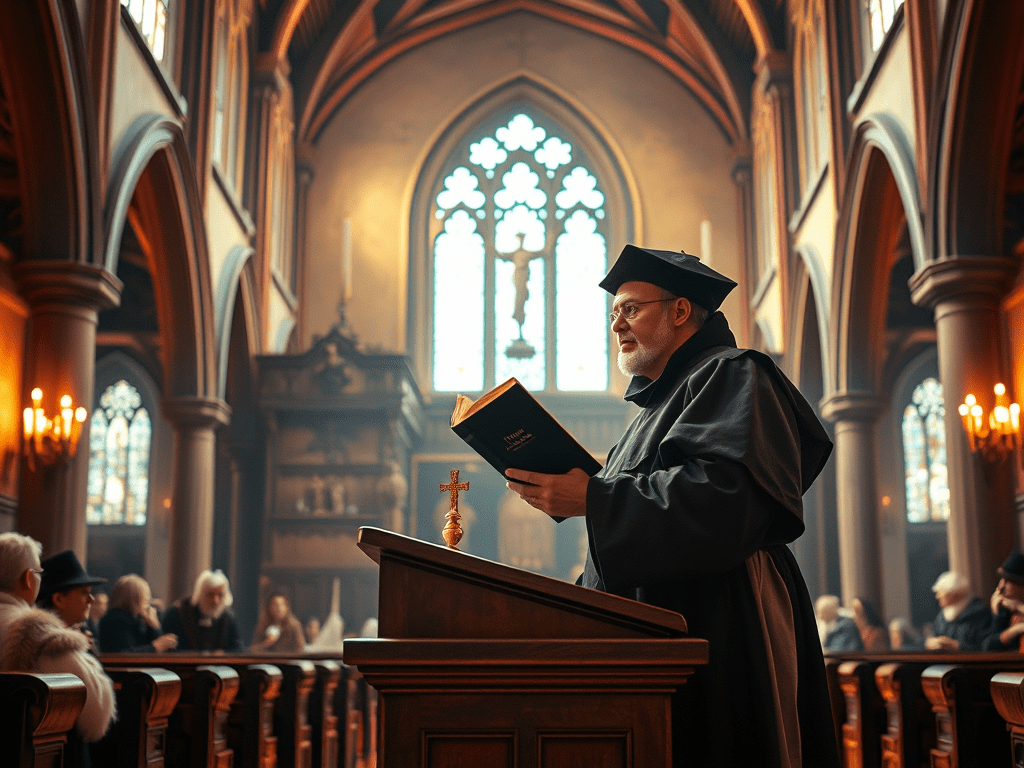
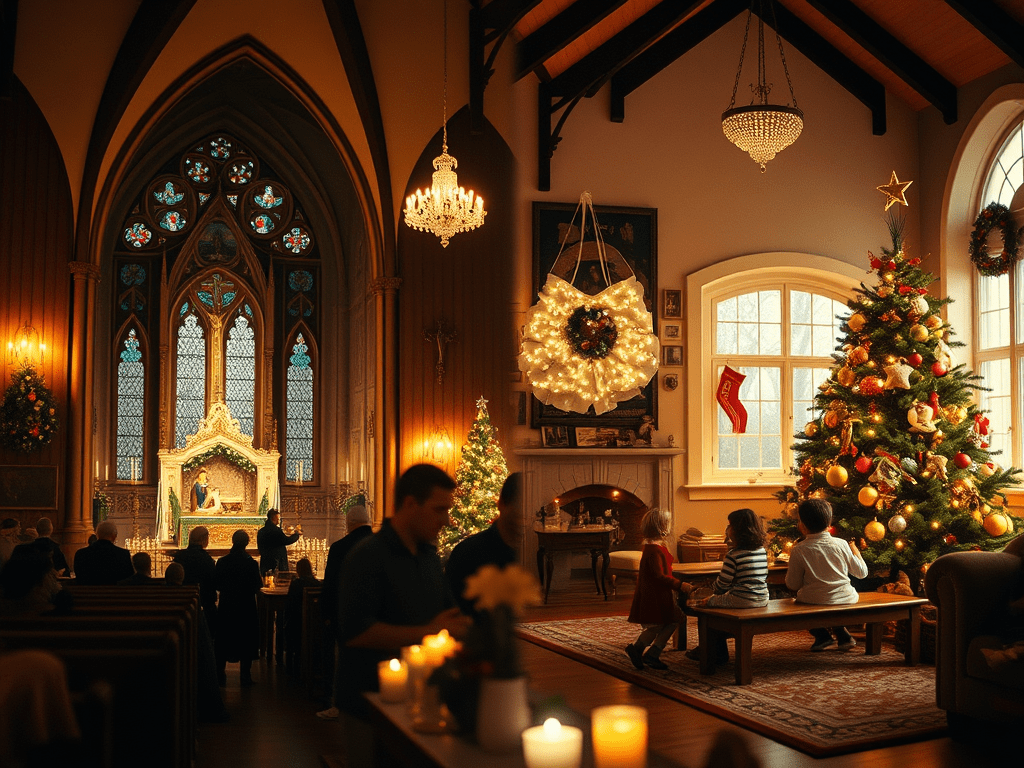
Protestant Eucharist vs. Catholic Eucharist.
Key Differences Between the Protestant and Catholic Eucharist
Theological Understanding:
- Catholic: The Eucharist is Christ’s literal Body and Blood (Transubstantiation).
- Protestant: Views range from symbolic (Memorialism) to spiritual presence (Lutheran and Reformed traditions).
Role of the Clergy:
- Catholic: Only ordained priests can consecrate the elements.
- Protestant: Depending on the denomination, Clergy or lay leaders or anyone may officiate.
Sacrificial Nature:
- Catholic: The Mass is a mystical re-presentation of Christ’s sacrifice.
- Protestant: The Lord’s Supper is typically seen as a remembrance of Christ’s sacrifice.
Communion Practices:
- Catholic: Closed communion for baptised Catholics in a state of grace.
- Protestant: Open communion in many traditions, welcoming all believers or non-believers.
- Liturgical Structure:
- Catholic: Highly formalised, with set prayers, rituals, and responses.
- Protestant: Ranges from structured liturgies to informal gatherings.
Common Ground
Despite these differences, the Catholic and Protestant Eucharistic practices share some key elements:
Christ-Centered: Both traditions focus on Jesus’ sacrifice and its significance for salvation.
Scriptural Foundation: In both traditions, the institution’s words (“This is my body… This is my blood”) form the basis of practice.
Community Aspect: Both see the Eucharist as a way of uniting believers and strengthening the faith community.
Focus on Grace: While the theological mechanisms differ. Yet Both Catholics and Protestants view the Eucharist as a means of encountering God’s grace.
Historical Context
The divergence in Eucharistic theology traces back to the Reformation in the 16th century. Martin Luther’s rejection of Transubstantiation and John Calvin’s emphasis on spiritual presence marked significant departures from Catholic doctrine. These debates were not merely theological but also shaped by broader concerns about Church authority, tradition, and Scripture.
In response to Protestant critiques and heresy, the Council of Trent (1545–1563) reaffirmed Catholic teachings on the Eucharist. This included Transubstantiation and the sacrificial nature of the Mass,
Meanwhile, Protestant reformers sought to simplify and reinterpret the practice. They aligned their emphasis on inclusivity regardless of belief and understanding of Scripture. The emphasis is on personal faith and how one interprets the truth.
Conclusion
The Eucharist embodies the richness and complexity of the Christian faith. It offers a lens through which to understand the Church’s unity and diversity.
Meanwhile, Protestant Eucharist vs. Catholic Eucharist traditions diverge significantly in their theology and practice. Both affirm the centrality of Christ’s sacrifice and the call to communal worship.
By exploring these differences with mutual respect, Christians can deepen their appreciation of their own traditions while fostering dialogue and understanding across denominational lines.
And you never know, Protestant believers may come to understand that Catholic way as I did.
It is the Catholic way, which Jesus instituted some 2000 years ago. After over 40 years of being a Protestant minister, I was led to understand and believe in the real presence of the Eucharist. I converted to Catholicism in July 2024, and I have never looked back.






 almostcatholic.blog
Leave a reply to Catholic vs. Protestant Priests Cancel reply