
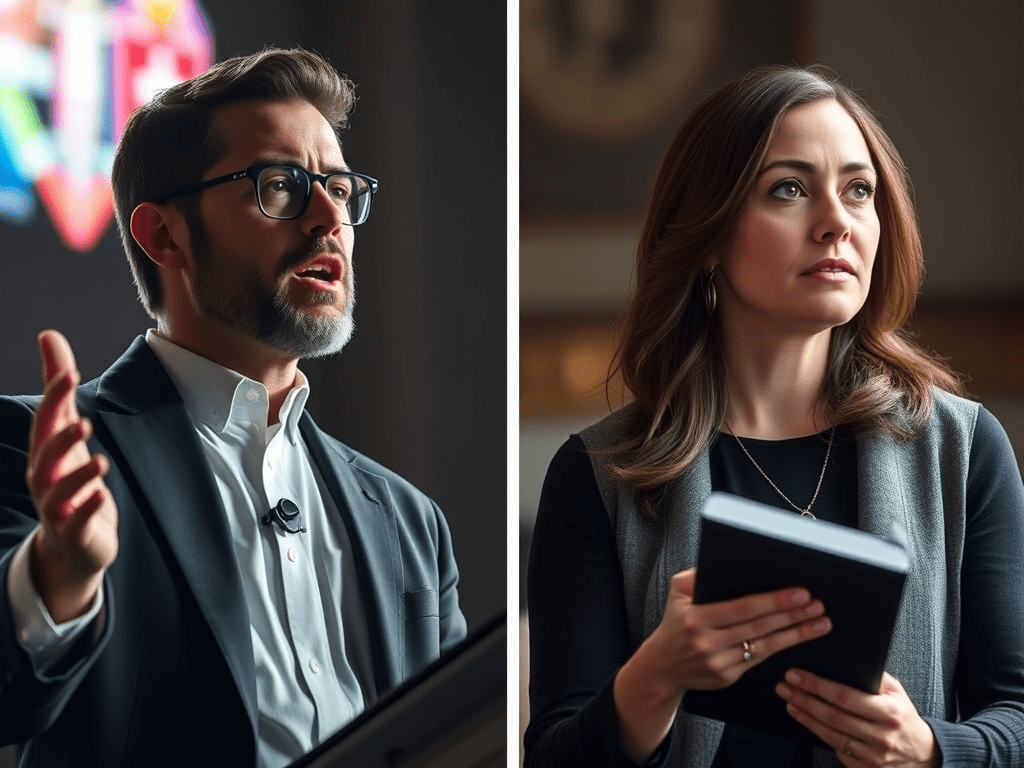
Catholic YouTube has grown rapidly over the last decade, becoming a major space for evangelisation, catechesis, commentary, and debate. But one trend is hard to ignore: Catholic men creators overwhelmingly dominate visibility, audience size, and algorithmic reach, while Catholic women creators often struggle to gain the same traction.
This raises an important question for Catholic media consumers and creators alike:
Why do Catholic viewers—and YouTube’s algorithm—tend to favour Catholic men creators over Catholic women creators?
The answer isn’t simple, and it isn’t about talent. It’s about culture, authority, incentives, and online behaviour. Let’s break it down.
Here are actual statistics and data you can cite to compare female Catholic YouTubers vs. male Catholic YouTubers — and to show that male-led Catholic channels tend to be larger or more prominent overall, even though there are successful female Catholic creators:
📊 1. Top Catholic YouTube Channels (General, Male-Heavy)
According to the Top 20 Catholic YouTubers list from Modash’s influencer database (Feb 2026), the largest Catholic channels include:
- Father David Michael Moses – ~430 k subscribers (male priest) with high average views. (modash.io)
- Several of the top-ranked creators on that list are male or male-led channels (e.g., priests or male Catholic personalities). (modash.io)
This indicates many of the most subscribed Catholic channels are male-led, though the list includes some non-gendered accounts too. (modash.io)
📊 2. Female Catholic YouTubers’ Stats (Subscribers & Growth)
From Modash’s Female Catholic Influencers on YouTube (Feb 2026):
| Channel | Subscribers | Average Views | Notes |
|---|---|---|---|
| Lila Rose Show (female) | ~474 k | ~23.1 k | One of the largest female Catholic creators. (modash.io) |
| Trish Short (female) | ~90 k | ~1.2 M views | (modash.io) |
| Hopewell Heights (female) | ~160 k | ~13.2 k | (modash.io) |
| Several other female Catholic channels (e.g., This Mama’s Faith, Off the Beaten Path, Kayla Buell) have smaller subscriber totals compared with the top male Catholic channels. (modash.io) |
This shows a range of female Catholic channels — some quite successful — BUT overall their subscriber counts tend to be lower or concentrated in more specific community niches compared with the largest male-led Catholic channels. (modash.io)
📊 3. Example Male Catholic Channels
Other Catholic creators with large followings include:
- Ascension Presents – nearly 973 k subscribers (English Catholic media channel with podcast/video content). (Wikipedia)
- Jimmy Akin – ~114 k subscribers (male apologist). (Wikipedia)
- Trent Horn – ~288 k subscribers (male apologetic channel). (Wikipedia)
- Casey Cole – ~430 k subscribers (male Franciscan priest). (Wikipedia)
These channels often rank among the most widely subscribed to in Catholic content. (Wikipedia)
📌 What This Comparison Shows
- Male-led Catholic channels (priests, male apologists, institutional media like Ascension Presents) generally appear among the highest subscriber counts in Catholic YouTube content (e.g., 400 k–900 k+). (modash.io)
- Female Catholic YouTubers have a range of sizes, with a few successful ones in the 100 k–400 k subscriber range, but fewer reach the very highest tiers represented by male channels. (modash.io)
- This isn’t scientific proof of algorithmic bias — many factors influence growth (content niche, style, audience interest, upload frequency, and promotion) — but the observable data trends suggest male Catholic creators more often occupy the largest subscriber counts on YouTube Catholic content lists. (modash.io)
📌 Caveats & Context
- Audience demographics on YouTube overall show a slightly higher male user base (around 54 % male globally vs. 46 % female). (cocktailmarketing.com.mx)
- Subscriber count alone doesn’t measure engagement or recommendation frequency — just popularity. But top lists and stats are a clear reference for relative reach.
.
It’s Not About Intelligence, Orthodoxy, or Talent
First, an important clarification:
The imbalance is not because Catholic women are less capable, less orthodox, or less educated.
In reality, many Catholic women creators:
- Have strong theological training
- Communicate with greater nuance
- Show pastoral sensitivity alongside doctrinal fidelity
Yet these strengths often perform worse on YouTube than louder, more confrontational styles. That tells us the issue isn’t quality—it’s what gets rewarded.
Catholic Culture and Perceptions of Authority
Catholicism is a hierarchical tradition. Teaching authority is historically:
- Male
- Clerical
- Associated with preaching and public instruction
Even in digital spaces, this shapes subconscious audience expectations. When a Catholic man speaks confidently on doctrine, morality, or Church politics, viewers often perceive his voice as more “authoritative”—even when he is a layman with no formal credentials.
Catholic women, by contrast, are frequently expected to:
- Share personal testimony rather than theological analysis
- Focus on lifestyle, modesty, or relationships
- Avoid strong public positions on controversial issues
These expectations limit how seriously women’s voices are received, regardless of their substance.
YouTube Rewards Controversy—And Men Are Punished Less for It
The YouTube algorithm prioritises:
- Engagement
- Watch time
- Emotional reactions
- Conflict-driven content
Catholic men creators are more likely to:
- Speak in absolutes
- Frame issues as battles for the faith
- Publicly criticise individuals or movements
When men do this, they’re often praised as “bold,” “strong,” or “defenders of orthodoxy.”
When Catholic women use the same tone, they are more likely to be labelled:
- Uncharitable
- Prideful
- Emotional
- Unfeminine
The result? Men are algorithmically rewarded for behaviour that women are socially punished for.
How the Algorithm Amplifies Existing Bias
YouTube’s algorithm doesn’t invent bias—it scales what already performs well.
Historically, male-led religious commentary generates:
- Higher click-through rates
- Longer average watch times
- More shares in male-dominated online communities
This creates a feedback loop:
- Male creators are recommended more often
- Their channels grow faster
- Growth is interpreted as authority
- Viewers trust them even more
Meanwhile, Catholic women creators—especially those who prioritise nuance and restraint—are less likely to trigger the engagement signals YouTube favours.
Catholic Women Face Heavier Audience Policing
Another overlooked factor is internal policing within Catholic spaces.
Catholic women creators tend to receive:
- More criticism of tone and demeanour
- More scrutiny of their personal lives
- More accusations of pride, disobedience, or impropriety
Men can be abrasive and still be framed as leaders.
Women are often expected to be:
- Confident but humble
- Attractive but not vain
- Clear but not confrontational
This pressure discourages many women from staying active online in the long term.
The Exceptions: Catholic Women Who Break Through
Despite these challenges, some Catholic women creators do succeed, and their success is revealing.
Common traits among these exceptions include:
- A clearly defined niche
- Strong orthodoxy paired with warmth
- Refusal to imitate male creator styles
- Integration of theology with lived experience, art, or education
Many successful women focus on:
- Catechesis for beginners
- Long-form educational content
- Theology applied to daily life rather than constant controversy
Their growth proves the audience exists—but the margin for error is smaller.
What This Means for Catholic Media Going Forward
Catholic YouTube’s gender imbalance isn’t the result of a conspiracy. It’s the outcome of:
- Cultural assumptions about authority
- Platform incentives that reward conflict
- Audience psychology
- Unequal standards applied to men and women
But the landscape is changing.
As Catholic audiences mature and grow more discerning, there is increasing space for women who offer depth, clarity, and fidelity without performing outrage.
Not louder.
Not angrier.
But deeper.
And in the long run, that depth may shape Catholic digital media more than algorithmic popularity ever could.
Here are what sources and discussions exist about YouTube’s algorithm and how it appears to treat Catholic content, plus commentary on how gender roles play into visibility on Catholic YouTube.
It’s important to be clear: I couldn’t find any academic research or official data proving the algorithm inherently favours Catholic men over Catholic women (e.g., no peer-reviewed study specifically measuring that effect).
However, as seen above, there are analyses, personal accounts, and related findings that are relevant to the claim:
🔎 1. Analysis of Catholic YouTube Culture
One recent commentary specifically discusses the experience of a Catholic woman creator on YouTube who feels the platform’s ecosystem favours male voices:
A Catholic creator analysed why male Catholic YouTubers tend to get more views, subscribers and collaborations than female Catholic creators. She argues that because male voices historically gained traction first, early success feeds the algorithm’s recommendation system, reinforcing their visibility over time.
Almost Catholic: The Journey Home on YouTube argues that what gets promoted is what already performs well. Early success leads to more recommendations, which in turn lead to even more visibility … Catholic women creators … often struggle to break through this cycle.
📊 2. Broad Research on YouTube’s Recommendation Biases
While not specific to Catholic creators or gender, there is research suggesting patterns in what YouTube tends to recommend, which may indirectly affect which religious voices grow faster:
- Studies by researchers and think-tanks have found that YouTube’s algorithms can recommend Christian and right-leaning content widely, even to accounts that didn’t previously seek it — reflecting what topics are amplified across the platform. (Straight Arrow News)
- This doesn’t measure male vs. female Catholic creators, but shows religious content often gets recommended more than expected.
- Other research shows that recommendation systems tend to amplify what already gets engagement, which can disadvantage content types that historically don’t attract the same early engagement levels (which could affect underrepresented creators). This is a known aspect of recommendation algorithms generally. (Wikipedia)
📌 3. Algorithmic Bias and Gender in Social Platforms (General Studies)
There’s broader research about algorithmic biases and gendered content on social networks (not Catholic-specific), which shows:
- Algorithms often reflect existing societal patterns, e.g., promoting content with higher engagement or content types advertisers value, which can mean creators outside the dominant content style get less reach. (Medium)
- Gender bias in algorithms has been documented in contexts such as image moderation and feed ranking; even if platforms claim neutrality, the training data and classification systems can embed human and cultural biases. (Business Insider España)
🧠 4. Community Discussions / Anecdotes
On platforms like Reddit, users have shared experiences where they feel YouTube’s algorithm tends to:
- Push certain types of religious content broadly, regardless of individual preferences. These aren’t scientific sources, but do reflect audience experiences with recommendation patterns. (Reddit)
- Suggest unexpected Christian videos (not Catholic-specific). (Reddit)
Again, these are individual observations rather than controlled studies.
⚠️ Summary
What is supported:
✔️ Creators (including Catholic women) feel that the algorithm reinforces existing popularity hierarchies. (Almost Catholic: The Journey Home)
✔️ YouTube tends to recommend religious content broadly, sometimes outside user intent. (Straight Arrow News)
✔️ Algorithmic systems can reflect social patterns and biases in data and engagement. (Wikipedia)
*What has no clear evidence yet:
❌ There is no academic or systematic research specifically proving that YouTube the algorithm itself, privileges Catholic men over Catholic women on the basis of gender alone.
We seek to foster a sense of community. All blog posts are here for your encouragement and to share with others. You will find various topics relevant to faith and wellness in everyday life.
☕ If you’d like to support what I am doing: Buy Me a Coffee. If you find my videos & writing inspiring and uplifting, consider supporting what I do. Buy me a coffee. Your support makes a difference in my life and helps me create more of what you and I like. Thank you
For Inspirational Videos By Almost Catholic YouTube Click HERE
🎤The Bride of Christ -OUR SISTER CHANNEL: Are you Interested in Learning about the End Times? The last days, The Bride of Christ? Click the link HERE- https://www.youtube.com/channel/UCvLwUIInOgLgYKV6bJUNQJA
I’m Paula Rose Parish — a former atheist of 21 years, Protestant pastor for over 40 years, and now a Catholic convert. After a powerful encounter where Jesus audibly called me to follow Him, my life was forever changed. I’ve ministered across Australia, the USA, and the UK, and today, I share my journey of faith, hope, and transformation.
This is a place for seekers, converts, reverts, and the curious. Here, you’ll find honest conversations about Catholicism, personal testimony, theological insight, and encouragement for those walking toward (or wondering about) the Catholic Church.
🕊️ From Atheism to Faith. From Pastor to Catholic.
📖 Read my blog: www.almostcatholic.blog
🌿For Free Christian Holistic Well-being Resources www.paularoseparish.org
And Videos- YouTube https://www.youtube.com/channel/UCvdQ4NPTNfXSnwd3pimPh0g
🕊️You can also find all my Books by following the links to Amazon.com or Amazon.co.uk
🙏 Subscribe, like, and share if you find something meaningful here.
Jesus loves you — and He’s calling you home. Welcome to the journey. 💕✝️
Contact by Email: paularoseparish@gmail.com
If you are struggling to find non-judgmental advice or support, please feel free to contact me. If you are grieving and need to talk or seek spiritual help, drop me an email to chat with me.
In the comments section, I would love for you to share your faith stories and comments with this community.
#catholichurch #protestant #journeyhome #catholicapologetics #rcia #paularoseparish
Copyright © 2024. Paula Rose Parish. All Rights Reserved


Thanks for your Visit Here, feel free to leave a comment 💟