
Same Saviour, Different Traditions
As someone who has experienced both Protestant and Catholic Christmas celebrations, I’ve come to appreciate the different ways each tradition tells the same story, the story of God entering the world as a fragile child.
Though Catholics and Protestants celebrate the same Saviour, the way they mark Christmas reveals centuries of history, theology, and beautiful diversity within the Christian faith. Though Catholics and Protestants celebrate the same Saviour, their marking of Christmas reveals centuries of history, theology, and beautiful diversity within the Christian faith. So let’s explore Protestant vs. Catholic Christmas Celebrations.
Introduction
Every December, lights twinkle, choirs sing, and families gather to celebrate the birth of Jesus Christ. Yet beneath the shared joy and familiar carols, Catholic and Protestant communities often approach Christmas in subtly different ways.
For both, Christmas is one of the holiest and most meaningful times of the year — a celebration of the Incarnation, God made flesh. But their timing, rituals, and emphases can vary significantly, shaped by centuries of theology, liturgy, and culture.
As someone who’s experienced both worlds, the structured solemnity of a Catholic Christmas and the simplicity of a Protestant one. I’ve come to appreciate how each tradition brings something unique to the story of Christ’s birth.
1. The Calendar: Christmas as a Season vs. a Day
One of the most striking differences lies in how long each tradition celebrates Christmas.
In the Catholic Church, Christmas isn’t just one day; it’s a season. The celebration begins on December 25 and continues for 12 days, ending with the Feast of the Epiphany (commemorating the visit of the Magi). In some cultures, the Christmas season extends even further to the Feast of the Baptism of the Lord in early January.
This rhythm flows from the liturgical calendar, which focuses on preparation, celebration, and reflection. Catholics spend the weeks before Christmas in Advent, a season of waiting and spiritual readiness. The celebration only begins once the waiting is over, and then it continues joyfully.
In contrast, many Protestant traditions, especially evangelical and non-denominational ones, focus more on Christmas Day itself (and sometimes Christmas Eve). Once December 26 arrives, decorations come down, and attention quickly shifts to New Year’s.
However, liturgical Protestants such as Anglicans, Lutherans, and Methodists share the Catholic appreciation of the Christmas season and often celebrate the Twelve Days of Christmas as well.
2. The Tone of Celebration: Solemn vs. Joyful Simplicity
Catholic Christmas liturgy carries a deep sense of mystery and reverence. The highlight is the Midnight Mass, a solemn yet jubilant celebration marking the moment of Christ’s birth. Incense fills the air, choirs sing ancient hymns, and Scripture readings recount the prophecies fulfilled that night.
This atmosphere reflects Catholic theology’s sacramental depth, the belief that Christ’s presence is not just remembered but encountered anew in the Eucharist and worship.
Protestant Christmas services, by contrast, often emphasise joy, community, and the Word. In many churches, the Candlelight Service on Christmas Eve is a cherished tradition. Congregations sing “Silent Night” as candles are lit one by one, symbolising the light of Christ entering the world.
While Catholic worship leans toward ritual and mystery, Protestant worship highlights Scripture, song, and personal reflection. The tone is often more informal and family-centred, but no less heartfelt.
3. Advent
Both Catholics and Protestants recognise Advent as the season leading up to Christmas, but they approach Christ’s arrival in different ways.
For Catholics, Advent is a distinct liturgical season marked by penitence and hopeful waiting. The Advent wreath, violet vestments, and readings about John the Baptist and Mary all prepare the heart for Christ’s arrival.
Many Catholics intentionally refrain from celebrating Christmas prematurely and prefer to save the full joy for the Christmas season itself.
In Protestant churches, Advent is often more celebratory than penitential. Weekly candlelightings may focus on themes like Hope, Peace, Joy, and Love, accompanied by Scripture readings and carols. It’s a time to anticipate Christ’s coming, but with less emphasis on penance and more on joyful expectation.
Both perspectives offer something valuable: the Catholic call to interior stillness and the Protestant invitation to activity.
4. Worship Practices and Services
Catholic Worship
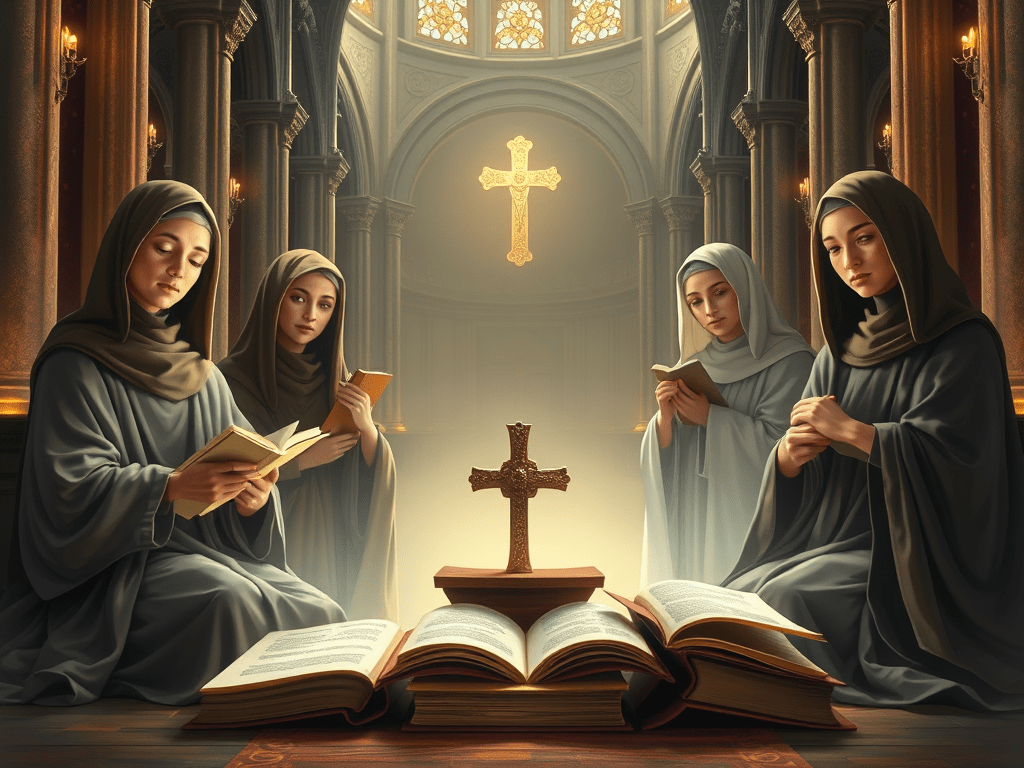
Catholic Christmas worship centres on the Mass, especially the Midnight, Dawn, and Day Masses, each with distinct readings and prayers. These liturgies are rich in symbolism: the Gloria (omitted during Advent) returns triumphantly, and the Creed includes a reverent kneel at the words “and was made man.”
Catholic churches are often beautifully decorated, with nativity scenes, candles, and greenery. Many families also attend a Christmas Novena, a nine-day period of prayer leading up to Christmas. Or they may take part in cultural devotions such as Las Posadas in Latin America or Simbang Gabi in the Philippines.
Protestant Worship
Protestant Christmas services vary widely depending on denomination and style.
- Lutheran and Anglican liturgies resemble the Catholic Mass, including readings from Isaiah, Luke, and John, as well as the singing of traditional hymns.
- Evangelical and non-denominational churches often feature Christmas musicals, drama, and worship concerts, focusing on sharing the Gospel message with visitors.
- In many Protestant homes, family-centred worship replaces formal services — reading Luke 2 together or praying before opening gifts.
While Catholics focus on the sacrament, Protestants emphasise the Scripture. Both celebrate the same Saviour through their own spiritual language.
5. Symbols and Traditions
Both Catholics and Protestants share many beloved Christmas symbols — the nativity scene, candles, and carols — but their origins and meanings can differ.
- Nativity scenes (crèches) are especially prominent in Catholic homes and churches. St. Francis of Assisi is credited with popularising the first living nativity in the 13th century. The crèche serves as a visual meditation on the humility of Christ’s birth.
- Advent wreaths are used in both traditions, but Catholics often connect them explicitly to the liturgical cycle, while Protestants focus on the weekly themes of faith and hope.
- Carolling began as a Catholic custom tied to community feasts but became a central part of Protestant worship and outreach.
Even small differences in timing and ritual reflect broader theological nuances: Catholics often emphasise the mystery of the Incarnation, while Protestants emphasise the joy of redemption that the birth of Christ inaugurates.
6. The “After” of Christmas
For Catholics, Christmas doesn’t end on December 25; it begins!
The Church celebrates the Octave of Christmas, eight days of continuous festivity that continue through Epiphany and the Baptism of the Lord.
This extended season keeps the mystery of the Incarnation alive in daily prayer and liturgy.
For most Protestants, however, the celebration typically concludes after Christmas Sunday. The focus then turns to thanksgiving and renewal. It’s about carrying the spirit of Christmas into daily discipleship.
In one sense, Catholics stay longer at the manger; Protestants walk from the manger to the mission. Both responses reflect love for the same Christ.
One Faith, Many Expressions
Though Catholics and Protestants celebrate Christmas differently, both are drawn by the same truth: the Word became flesh and dwelt among us.
Catholicism teaches believers to encounter that mystery through sacrament and season — through reverent liturgy and a rhythm that slows time.
Protestantism invites believers to encounter it through Scripture and song through heartfelt worship and personal devotion.
Neither approach is complete without the other. Together, they reflect the fullness of Christian joy: the holy meeting the human, the eternal entering time.
So whether you’re lighting a candle in a quiet chapel or singing carols in a crowded church.
Remember that the heart of Christmas is not in how we celebrate, but in Whom we celebrate.
“Glory to God in the highest, and on earth peace, goodwill toward men.” — Luke 2:14
For Inspirational Videos Click HERE
☕☕ If you’d like to support what I am doing: Buy Me a Coffee. If you find my videos & writing inspiring and uplifting, consider supporting what I do. Buy me a coffee. Your support makes a difference in my life and helps me create more of what you and I like. Thank you
For Inspirational Videos By Almost Catholic YouTube Click HERE
🎤The Bride of Christ -OUR SISTER CHANNEL: Are you Interested in Learning about the End Times? The last days, The Bride of Christ? Click the link HERE- https://www.youtube.com/channel/UCvLwUIInOgLgYKV6bJUNQJA
I’m Paula Rose Parish — a former atheist of 21 years, Protestant pastor for over 40 years, and now a Catholic convert. After a powerful encounter where Jesus audibly called me to follow Him, my life was forever changed. I’ve ministered across Australia, the USA, and the UK, and today, I share my journey of faith, hope, and transformation.
This is a place for seekers, converts, reverts, and the curious. Here, you’ll find honest conversations about Catholicism, personal testimony, theological insight, and encouragement for those walking toward (or wondering about) the Catholic Church.
🕊️ From Atheism to Faith. From Pastor to Catholic.
📖 Read my blog: www.almostcatholic.blog
🌿For Free Holistic Well-being Resources www.paularoseparish.org
And Videos- YouTube https://www.youtube.com/channel/UCvdQ4NPTNfXSnwd3pimPh0g
🕊️You can also find all my Books by following the links to Amazon.com or Amazon.co.uk
🙏 Subscribe, like, and share if you find something meaningful here.
Jesus loves you — and He’s calling you home. Welcome to the journey. 💕✝️
Contact by Email: paularoseparish@gmail.com
If you are struggling to find non-judgmental advice or support, please feel free to contact me. If you are grieving and need to talk or seek spiritual help, drop me an email to chat with me.
In the comments section, I would love for you to share your faith stories and comments with this community.
#catholichurch #protestant #journeyhome #catholicapologetics #rcia #paularoseparish
Copyright © 2024. Paula Rose Parish. All Rights Reserved
We seek to foster a sense of community. All blog posts are here for your encouragement and to share with others. You will find various topics relevant to faith and wellness in everyday life.
#Catholic vs Protestant Christmas, #Christmas worship traditions, #Advent and Christmas in Christianity, #Catholic liturgical celebrations, #Christmas Eve services, #Christian faith and holidays


Thanks for your Visit Here, feel free to leave a comment 💟