
Terrorism, Faith, and the Question of the “Last Days” A Catholic Perspective
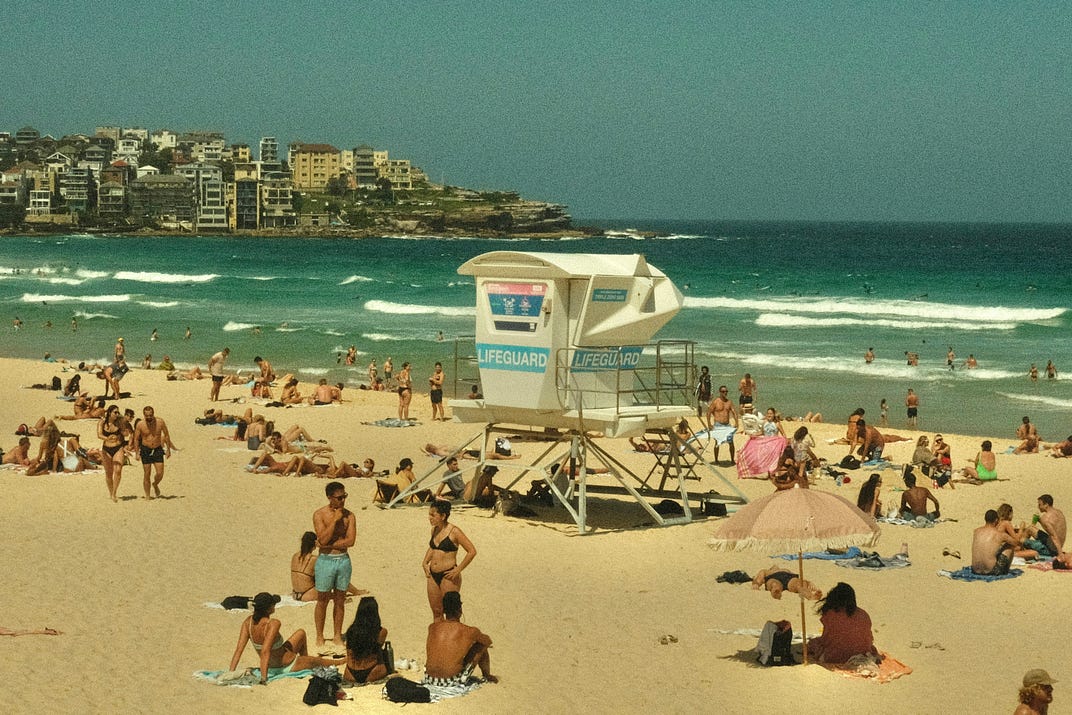
I am very saddened to hear about the Bondi Terrorist shooting last Sunday. I grew up in Australia and lived in Sydney for some time. I lived in Australia for 35 years. Let’s pray for the victims.
Living in Australia, I was well aware that the land down under is one of the most culturally and linguistically diverse nations in the world. More than 300 languages are spoken in Australian households, and Australians identify with over 100 different faiths and religious traditions. Many of my school friends were of ethic origin. Despite this remarkable diversity, Australia has enjoyed a relatively peaceful modern history. Because of this religious diversity, Australia is often described as a secular society, to keep peace and unity.
Yet peace does not mean immunity.
Like all Western societies, Australia has faced the reality of violent extremism. While the overall scale of terrorism has been comparatively small, the threat has persisted over time. As Australia’s 2010 Counter-Terrorism White Paper made clear, violent extremism is considered “real and enduring” — a persistent feature of the nation’s security environment.
This raises important questions:
How has terrorism manifested in Australia? How should it be understood morally and spiritually? And for people of faith, particularly Catholics, does terrorism signal that we are living in the “last days”?
A Brief History of Terrorism in Australia
Australia’s experience with terrorism has been intermittent rather than constant, shaped by changing ideological and political contexts.
Early Incidents: 1970s–1990s
The history of modern terrorism in Australia began in earnest during the 1970s. Early incidents were primarily driven by ethno-nationalist and political motivations, rather than religious extremism.
One of the earliest examples involved Croatian separatist groups, responsible for several attacks, including the 1972 bombing of the Yugoslav General Trade and Tourist Agency in Sydney, which injured sixteen people.
Perhaps the most significant incident of this period was the Sydney Hilton Hotel bombing in 1978, which occurred during the Commonwealth Heads of Government Meeting. The explosion killed three people and injured eleven, deeply shocking the nation and exposing Australia to the realities of international political violence.
During the following decades, Australia also experienced ideologically driven violence, including racially motivated attacks linked to far-right movements and a fatal shooting at an abortion clinic in 2001.
The Post-9/11 Era and Jihadist Terrorism
The terrorist attacks of September 11, 2001, fundamentally reshaped global security thinking. But for Australians, it was the 2002 Bali bombings that made terrorism feel immediate and personal. Eighty-eight Australians were among the 202 victims killed.
In the years that followed, Australia shifted its counter-terrorism focus toward Islamist-inspired extremism, accompanied by significant legislative changes and increased intelligence cooperation.
Notable incidents during this period included:
- The Lindt Café siege in Sydney (2014), in which two hostages and the perpetrator were killed
- The Parramatta shooting (2015), where a civilian police employee was murdered outside police headquarters
At the same time, Australian authorities successfully disrupted numerous major plots, including plans to attack the Melbourne AFL Grand Final, Crown Casino, and the Holsworthy Barracks military base. These disruptions highlight an often-overlooked reality: many terrorist attacks never occur because they are stopped before they happen.
The Rise of Far-Right Extremism
In recent years, Australia’s terrorism landscape has shifted once again. According to the Australian Security Intelligence Organisation, far-right extremism now accounts for a significant proportion of active counter-terrorism investigations.
Online radicalisation, conspiracy theories, white supremacist ideology, and anti-government sentiment often fuel this form of extremism. Unlike earlier waves of terrorism, it is frequently decentralised and individualised, thereby complicating detection and prevention.
Recent Events and Communal Impact
Australia has also witnessed several disturbing recent attacks, including a church stabbing in Wakeley and a synagogue arson attack.
December 2025, a mass shooting at Bondi Beach that targeted the Jewish community during Hanukkah—killing 15 people, injuring 45 + and killing a 10-year-old Ukrainian refugee.
These incidents underscore a painful truth: terrorism does not discriminate by faith or background. Its aim is not merely physical harm, but psychological terror to fracture trust and sow fear across entire communities.
The Catholic Church’s Teaching on Terrorism
The response of the Catholic Church to terrorism is unambiguous: terrorism is morally evil in itself.
The Catechism of the Catholic Church teaches that:
“Terrorism threatens, wounds, and kills indiscriminately; it is gravely against justice and charity.”
There is no political goal, ideological cause, or religious justification that can excuse it. The deliberate targeting of civilians is always immoral.
Even more strongly, the Church teaches that invoking God’s name to justify violence is a blasphemy, which is a profound distortion of religion that turns faith into a weapon rather than a path to truth and peace.
How the Church Responds: Beyond Force Alone
While recognising the legitimate role of governments in protecting citizens, the Church consistently argues that security measures alone are not enough.
Instead, it promotes a multi-dimensional response that includes:
Prayer and fasting, as acts of spiritual solidarity and conversion
Dialogue and encounter, particularly between religious and cultural communities
Addressing injustice and inequality, which can create conditions where radicalisation flourishes
This approach does not excuse terrorism, nor does it deny personal responsibility. Instead, it seeks to confront both the symptoms and the deeper causes of violence.
Terrorism and the Question of the “Last Days”
Periods of violence and instability often prompt questions about whether the world is approaching its end. From a Catholic perspective, this question must be approached carefully.
Catholic eschatology, the Church’s teaching on the “last things”, focuses primarily on death, judgment, heaven, and hell, rather than predicting timelines or interpreting specific events as definitive signs of the end.
Scripture speaks of general signs preceding Christ’s return: persecution, suffering, moral confusion, and trials. However, the Church does not teach that terrorism, on its own, is a clear indicator that the end is imminent.
Jesus himself warned against fear-driven speculation, reminding his followers:
“In the world you will have trouble, but take courage, I have conquered the world.” (John 16:33)
The emphasis is not on fear, but on vigilance, faithfulness, and hope.
Living Faithfully in a Troubled World
From a Catholic perspective, terrorism is understood as a manifestation of evil in a fallen world. It’s something to be resisted both spiritually and practically. But it is not the final chapter of history.
The Church calls believers not to panic or despair, but to:
- Live lives of holiness and integrity
- Perform works of charity and justice.
- Build bridges rather than walls.
- Trust in God’s ultimate victory over evil
Australia’s experience with terrorism reminds us that peace cannot be taken for granted. But it also shows the power of resilience, solidarity, and moral clarity.
In the end, terrorism seeks to spread fear and division. Faith responds with courage, compassion, and hope. Faith is confident that history is not moving toward chaos but toward redemption.
☕ If you’d like to support what I am doing: Buy Me a Coffee. If you find my videos & writing inspiring and uplifting, consider supporting what I do. Buy me a coffee. Your support makes a difference in my life and helps me create more of what you and I like. Thank you
For Inspirational Videos Click HERE
I’m Paula Rose Parish — a former atheist of 21 years, Protestant pastor for over 40 years, and now a Catholic convert. After a powerful encounter where Jesus audibly called me to follow Him, my life was forever changed. I’ve ministered across Australia, the USA, and the UK, and today, I share my journey of faith, hope, and transformation.
This is a place for seekers, converts, reverts, and the curious. Here, you’ll find honest conversations about Catholicism, personal testimony, theological insight, and encouragement for those walking toward (or wondering about) the Catholic Church.
🕊️ From Atheism to Faith. From Pastor to Catholic.
📖 Read my blog: www.almostcatholic.blog
🌿For Free Well-being Resources www.paularoseparish.org
🕊️You can also find all my Books by following the links to Amazon.com or Amazon.co.uk
🙏 Subscribe, like, and share if you find something meaningful here.
Jesus loves you — and He’s calling you home. Welcome to the journey.
Contact by Email: paularoseparish@gmail.com


Thanks for your Visit Here, feel free to leave a comment 💟