
Understanding Her Role in Catholic Theology
When I was a Protestant, I never gave much thought to Mary, mother of God, except at Christmas time. I would say-
MARY A VIRGIN ?? IMPOSSIBLE!
For protestants, the idea that Mary is a perpetual virgin is silly. So, Mary is put on the back burner.
Many protestants belive that Mary is nothing more than a birthing vessel. I always wondered about the Mother of God: Understanding Her Role in Catholic Theology.
I began exploring Marian theology many years ago and was careful, as a protestant, not to give her a special place. The reason is that my protestant teachers told me that if I venerated Mary, I would be committing idolatry.
This made me afraid and extremely cautious in my dealings with Mary. But the deeper I dived into Catholic theology, the more I understood the importance of Mary in the redemptive plan and her influence upon our lives. Mary is undoubtedly a positive influence in my life.
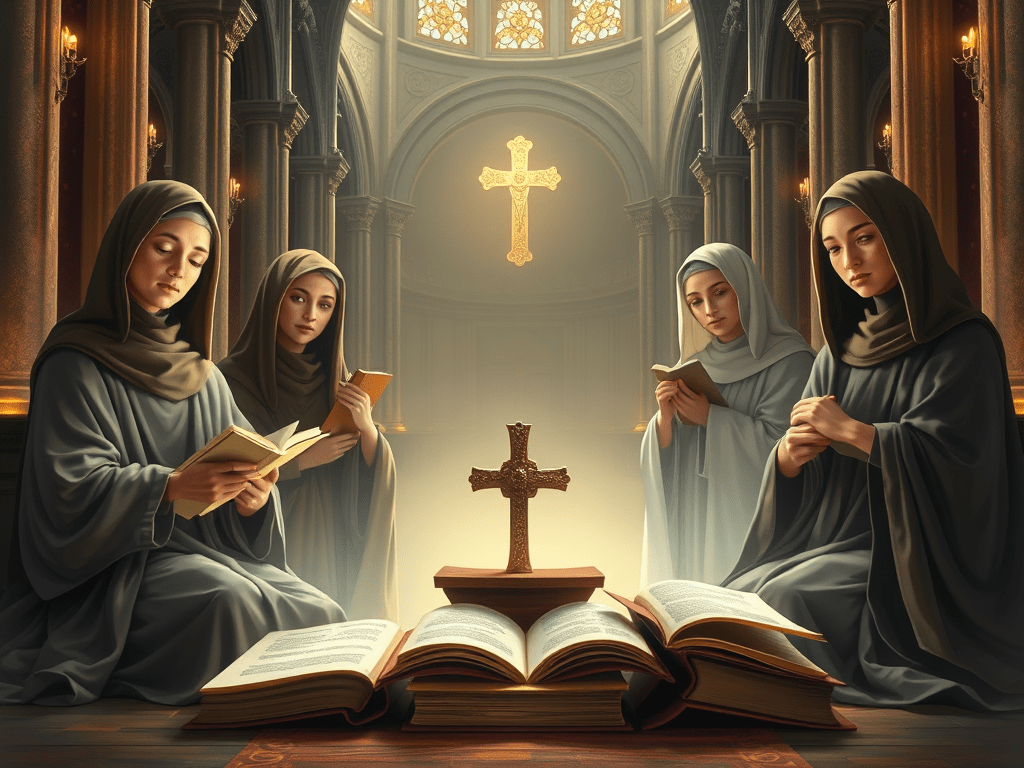
In the Catholic tradition, Mary, the mother of Jesus, holds a unique and revered role as the Mother of God. This title, officially recognised by the Council of Ephesus in 431 AD, reflects the profound theological and spiritual significance attributed to Mary within Christianity.
Biblical Foundation:
The foundation of Mary’s role as the Mother of God is rooted in biblical narratives, particularly in the Gospels of Matthew and Luke. In the Gospel of Luke, Mary receives the angel Gabriel’s announcement that she will conceive and bear the Son of God.
Her fiat, in other words, her YES- her willing acceptance of God’s plan, is encapsulated in her response, “Behold, I am the handmaid of the Lord; let it be to me according to your word” (Luke 1:38). Mary’s pivotal role in the Incarnation, as the mother of Jesus Christ, establishes her as the Mother of God.
Council of Ephesus:
The Council of Ephesus, held in 431 AD, addressed the theological understanding of the Incarnation and affirmed Mary’s title as Theotokos, meaning “God-bearer” or “Mother of God.” This declaration emphasised the inseparable union of Jesus’ divine and human natures, reinforcing Mary’s role in the mystery of the Son of God taking on human flesh.
Intercessor and Advocate:
Catholics believe that Mary continues to play a maternal and intercessory role in the lives of believers.
As the Mother of God, she is seen as a powerful advocate before her Son.
Catholics often pray to Mary, seeking her intercession for guidance, protection, and assistance on their spiritual journeys.
Model of Faith and Obedience:
Mary is venerated not only for her biological motherhood but also as a model of faith and obedience.
Her response to God’s call exemplifies unwavering trust and surrender to divine providence.
Christians look to Mary as a guide in their own journeys of faith, learning from her example of humility, devotion, and submission to God’s will.
Perpetual Virginity:
Christian tradition also upholds the belief in Mary’s perpetual virginity.
This doctrine asserts that Mary remained a virgin before, during, and after the birth of Jesus. This aspect of her life underscores the extraordinary nature of the Incarnation and Mary’s unique role in God’s salvific plan.
Immaculate Conception:
The Catholic Church teaches the doctrine of the Immaculate Conception, which asserts that Mary was conceived without original sin. This belief emphasises Mary’s holiness and purity, making her a fitting vessel to bear the sinless Son of God.
The Immaculate Conception is a dogma defined by Pope Pius IX in 1854.
Assumption into Heaven:
Pope Pius XII declared the Assumption of Mary as a dogma in 1950, affirming that Mary was taken body and soul into heaven at the end of her earthly life.
This belief emphasises Mary’s unique and exalted role in salvation history, as her assumption anticipates the destiny that awaits all faithful believers.
Marian Devotions and Feasts:
The Catholic Church has a rich tradition of Marian devotions and feasts in honour of Mary.
Popular prayers such as the Hail Mary and the Rosary, and celebrations like the Feast of the Immaculate Conception and the Feast of the Assumption, are expressions of Catholics’ deep devotion and love for the Mother of God.
Mary is undoubtedly a positive influence in my life. She points me to Jesus to be faithful and obedient to his majesty and Lordship.
Mary’s role as the Mother of God is central to Catholic faith and theology.
Recognised through biblical foundations, ecumenical councils, and doctrinal declarations, Mary is venerated as a model of faith, a powerful intercessor, and a central figure in the unfolding of God’s redemptive plan.
Her significance extends beyond biological motherhood, encompassing spiritual motherhood and exemplifying virtues that inspire Catholics in their own journeys of faith.
☕ If you’d like to support what I am doing: Buy Me a Coffee. If you find my videos & writing inspiring and uplifting, consider supporting what I do. Buy me a coffee. Your support makes a difference in my life and helps me create more of what you and I like. Thank you
For Inspirational Videos Click HERE
I’m Paula Rose Parish — a former atheist of 21 years, Protestant pastor for over 40 years, and now a Catholic convert. After a powerful encounter where Jesus audibly called me to follow Him, my life was forever changed. I’ve ministered across Australia, the USA, and the UK, and today, I share my journey of faith, hope, and transformation.
This is a place for seekers, converts, reverts, and the curious. Here, you’ll find honest conversations about Catholicism, personal testimony, theological insight, and encouragement for those walking toward (or wondering about) the Catholic Church.
🕊️ From Atheism to Faith. From Pastor to Catholic.
📖 Read my blog: www.almostcatholic.blog
🌿For Free Holistic Well-being Resources www.paularoseparish.org
And Videos- YouTube https://www.youtube.com/channel/UCvdQ4NPTNfXSnwd3pimPh0g
🕊️You can also find all my Books by following the links to Amazon.com or Amazon.co.uk
🙏 Subscribe, like, and share if you find something meaningful here.
Jesus loves you — and He’s calling you home. Welcome to the journey. 💕✝️
Contact by Email: paularoseparish@gmail.com
If you are struggling to find non-judgmental advice or support, please feel free to contact me. If you are grieving and need to talk or seek spiritual help, drop me an email to chat with me.
In the comments section, I would love for you to share your faith stories and comments with this community.
#catholichurch #protestant #journeyhome #catholicapologetics #rcia #paularoseparish
Copyright © 2024. Paula Rose Parish. All Rights Reserved
We seek to foster a sense of community. All blog posts are here for your encouragement and to share with others. You will find various topics relevant to faith and wellness in everyday life.
#fitnessmotivation #healthwellbeing #wellness


Thanks for your Visit Here, feel free to leave a comment 💟